Jose Montalvo · Systems & production records

Standard work and control

The documents that keep it the same on the days I'm not there.

21

Work instruction control

Wieland Metal Services · Operations Manager · 2025–2026

What it is
The contents page of the work instruction binder: 29 instructions and 3 workflow maps, each with an index number, a revision letter and an effective date.
Why it existed
An instruction nobody can find, or that three people have three versions of, is worse than none.
What changed
One binder, one index, revision-controlled. This is the page an auditor turns to first, and it's why the 2025 audit closed with zero findings.
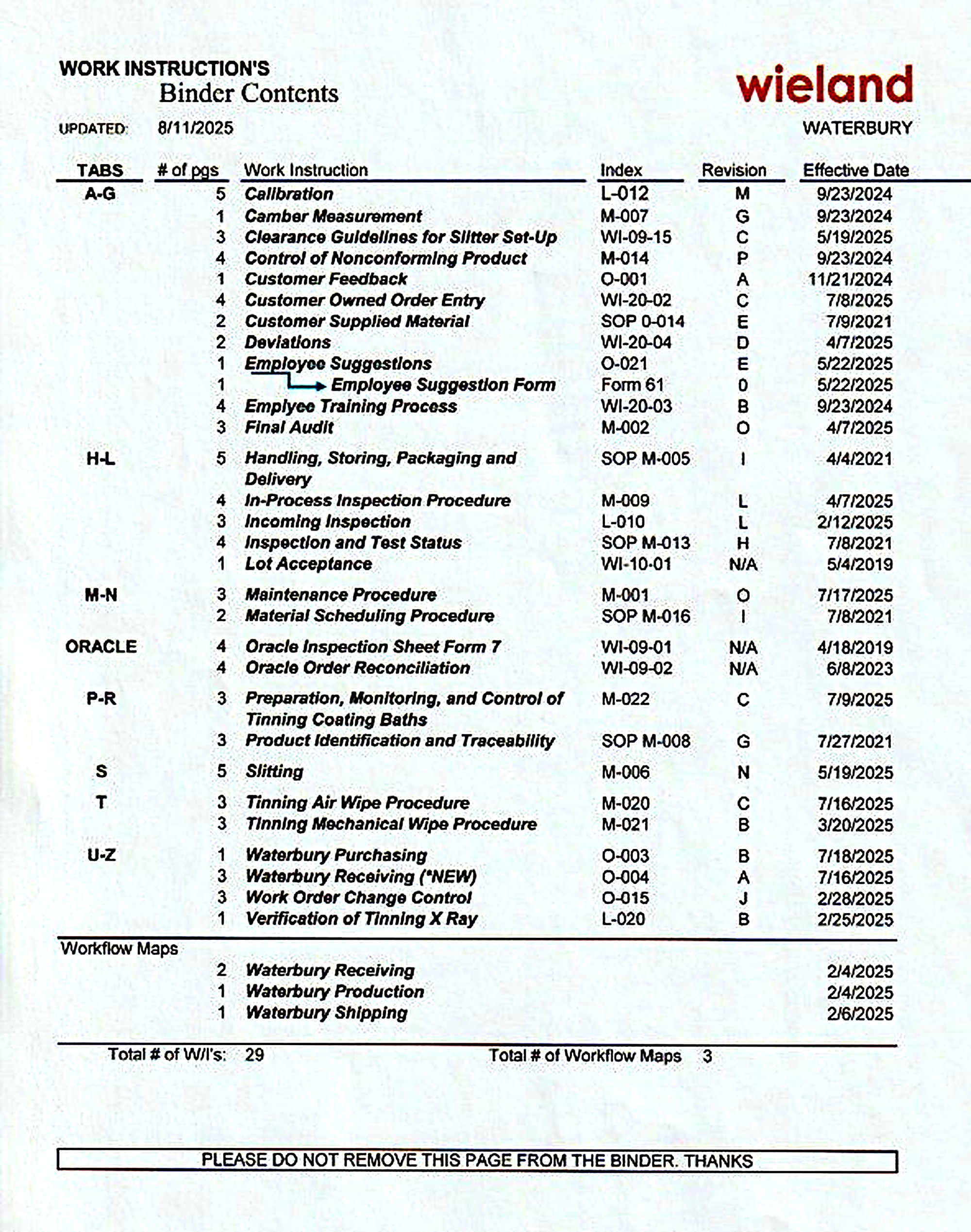
Work instruction binder contents page with revisions and dates
Tabbed A–G through U–Z plus an Oracle section, page counts, index numbers, revision letters, effective dates, and the totals at the bottom. "Please do not remove this page from the binder" is there for a reason.Tap the page to open it full size
22

Root cause and corrective action

Wieland Metal Services · Operations Manager · 2025–2026

What it is
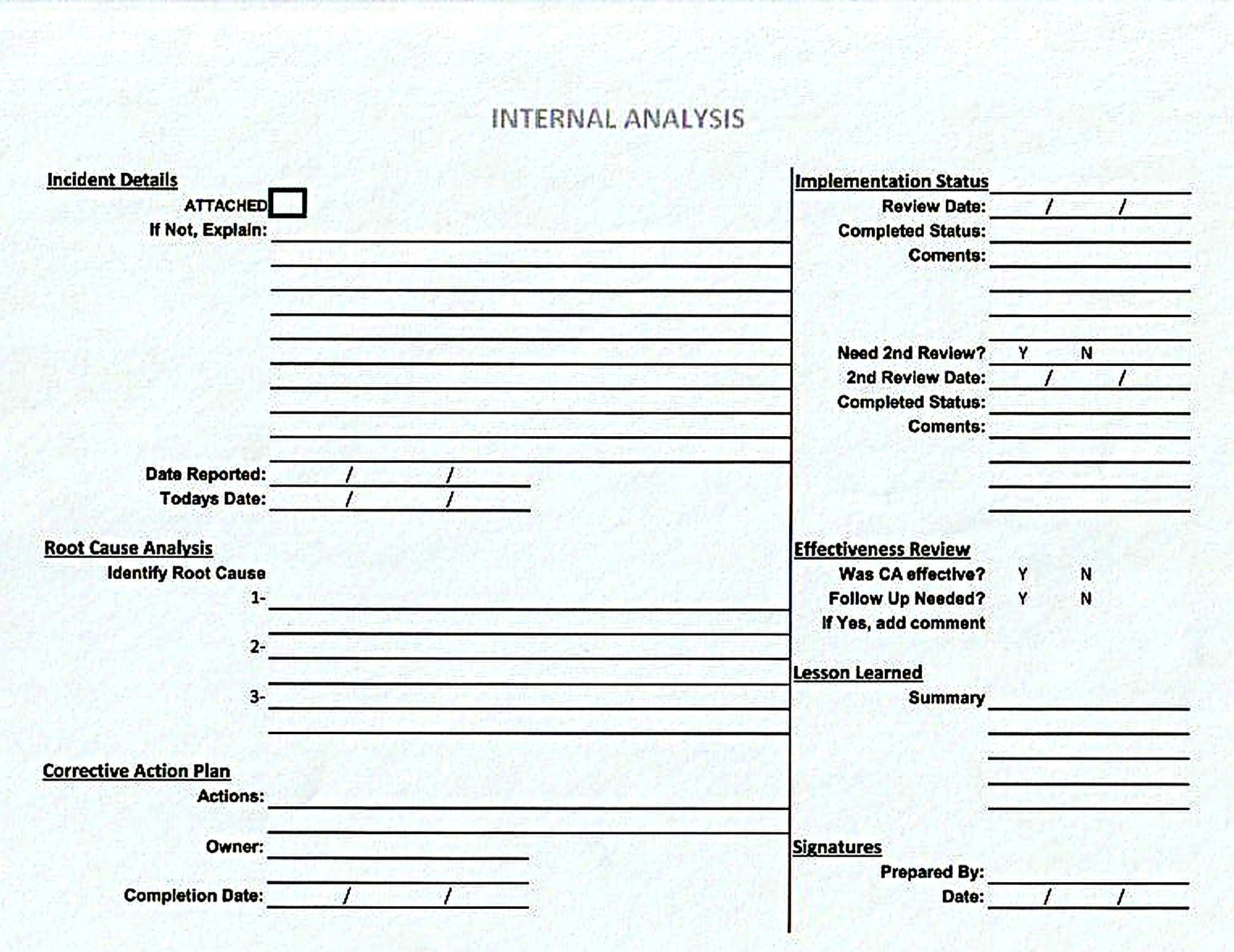
The internal analysis form: the incident, three root causes, a corrective action with an owner and a date, then two reviews — did we do it, and did it work.
Why it existed
Corrective actions were being written and never checked. An action nobody verifies is a wish.
What changed
Every incident ends with a signature and an effectiveness review, not a closed ticket.
Internal analysis form for incident root cause and corrective action
Blank on purpose — this is the form itself. Incident detail, three root causes, corrective action with an owner and completion date, implementation review, a second review if it's needed, then the effectiveness review: was the corrective action effective, and does it need follow-up. Lesson learned, then signatures.Tap the page to open it full size
23

Package label generator

Wieland Metal Services · Operations Manager · 2025–2026

What it is
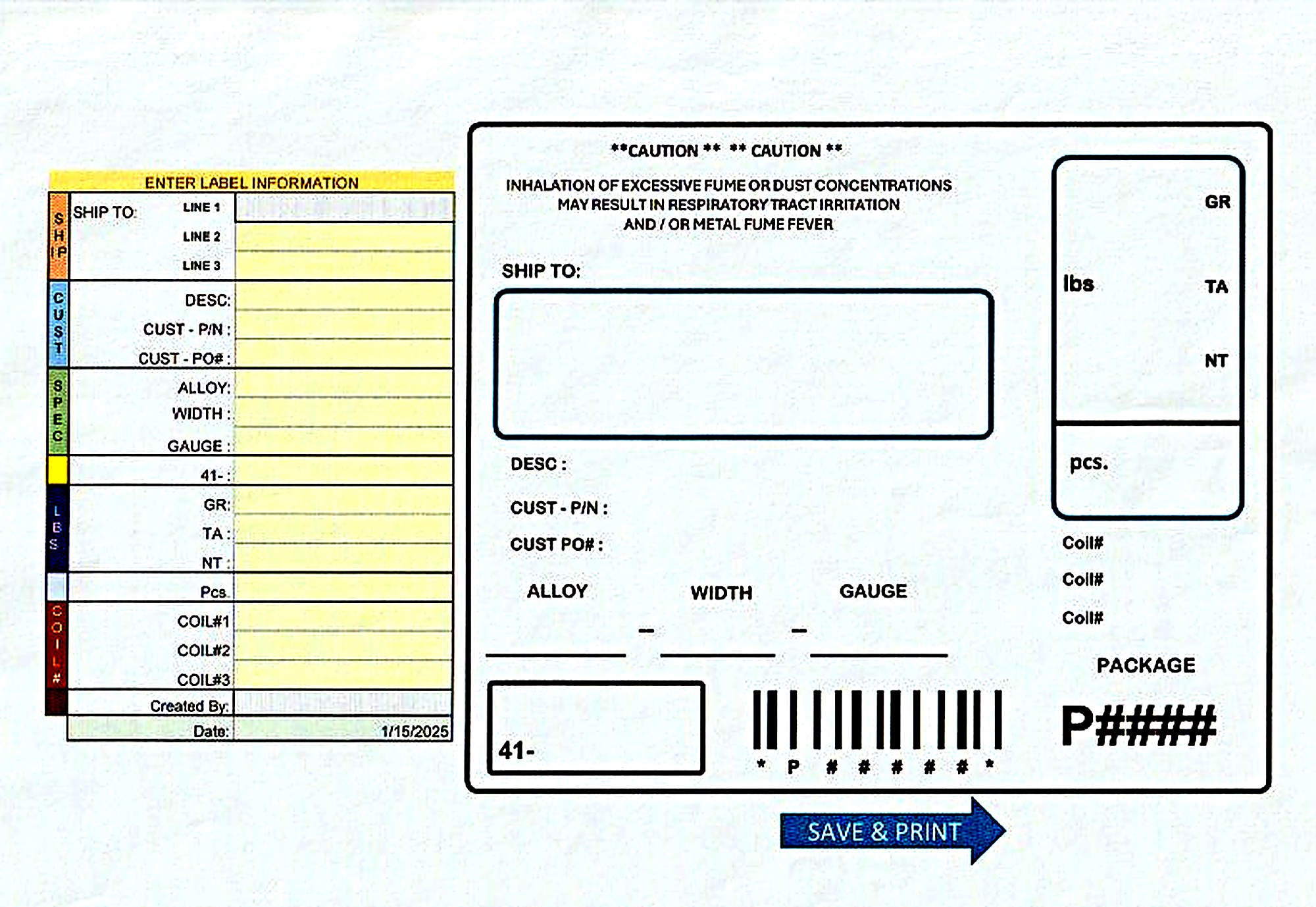
Fill the panel on the left, hit Save & Print, and the shipping label comes out the other side with the barcode and the handling caution already on it.
Why it existed
Labels were being typed by hand, and a typo on a label is a coil that ships to the wrong customer.
What changed
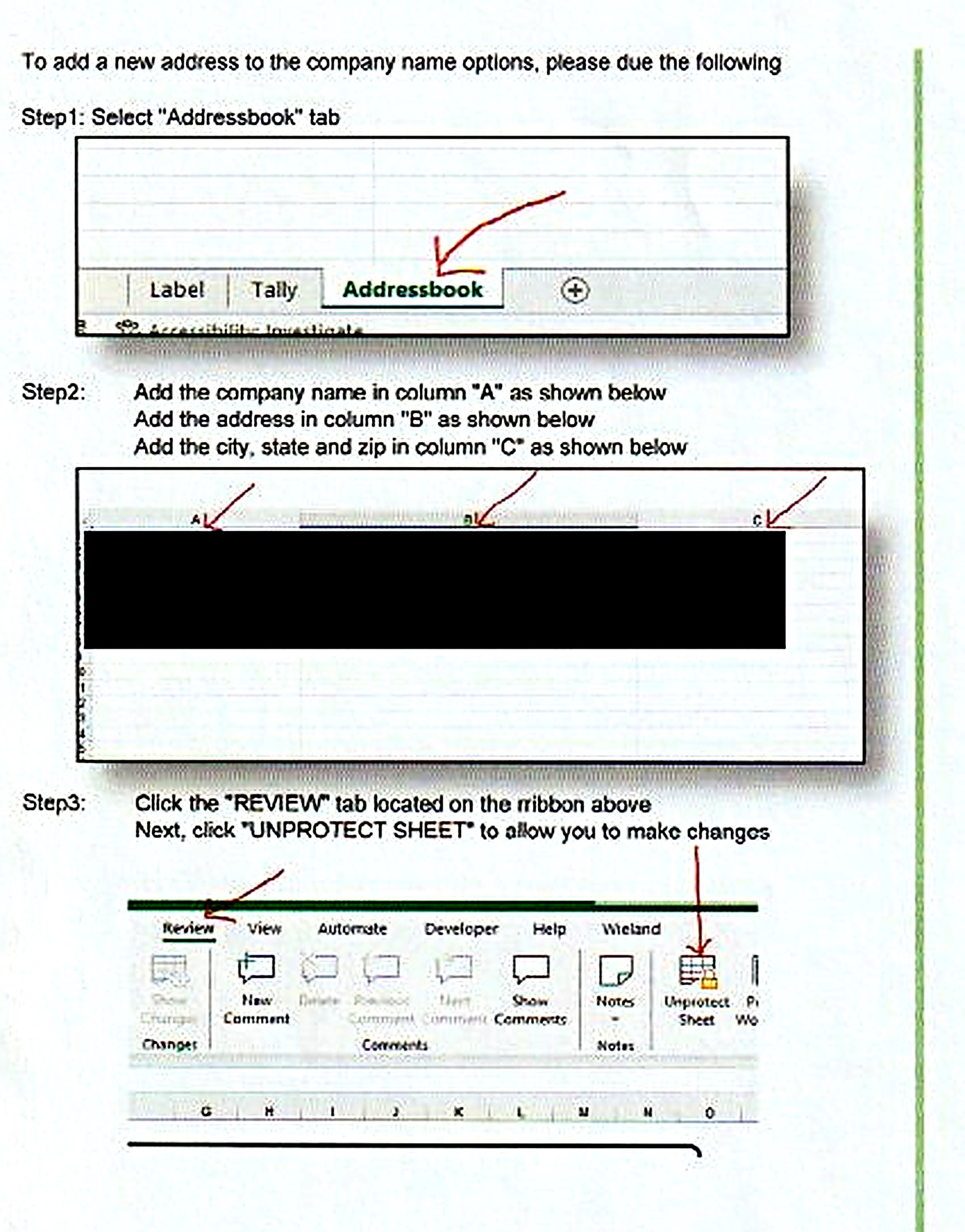
One entry point, one format, every label the same. The second page is the instruction sheet I wrote so somebody else could keep the address book behind it current without me.
Label entry panel and the generated package labelStep by step instructions for updating the address book
Ship-to, description, customer part and PO, alloy, width, gauge, weights, piece count and up to three coil numbers — entered once on the left, printed as the package label on the right. The coloured blocks down the input panel group the fields that belong to the same resource, so you fill a block at a time instead of working down a list of twenty boxes. The instructions are written for somebody who has never opened the file: which tab, which column, and how to unprotect the sheet. Customer names and addresses blacked out.Tap a page to open it full size
24

Evacuation and emergency equipment map

Wieland Metal Services · Operations Manager · 2025–2026

What it is
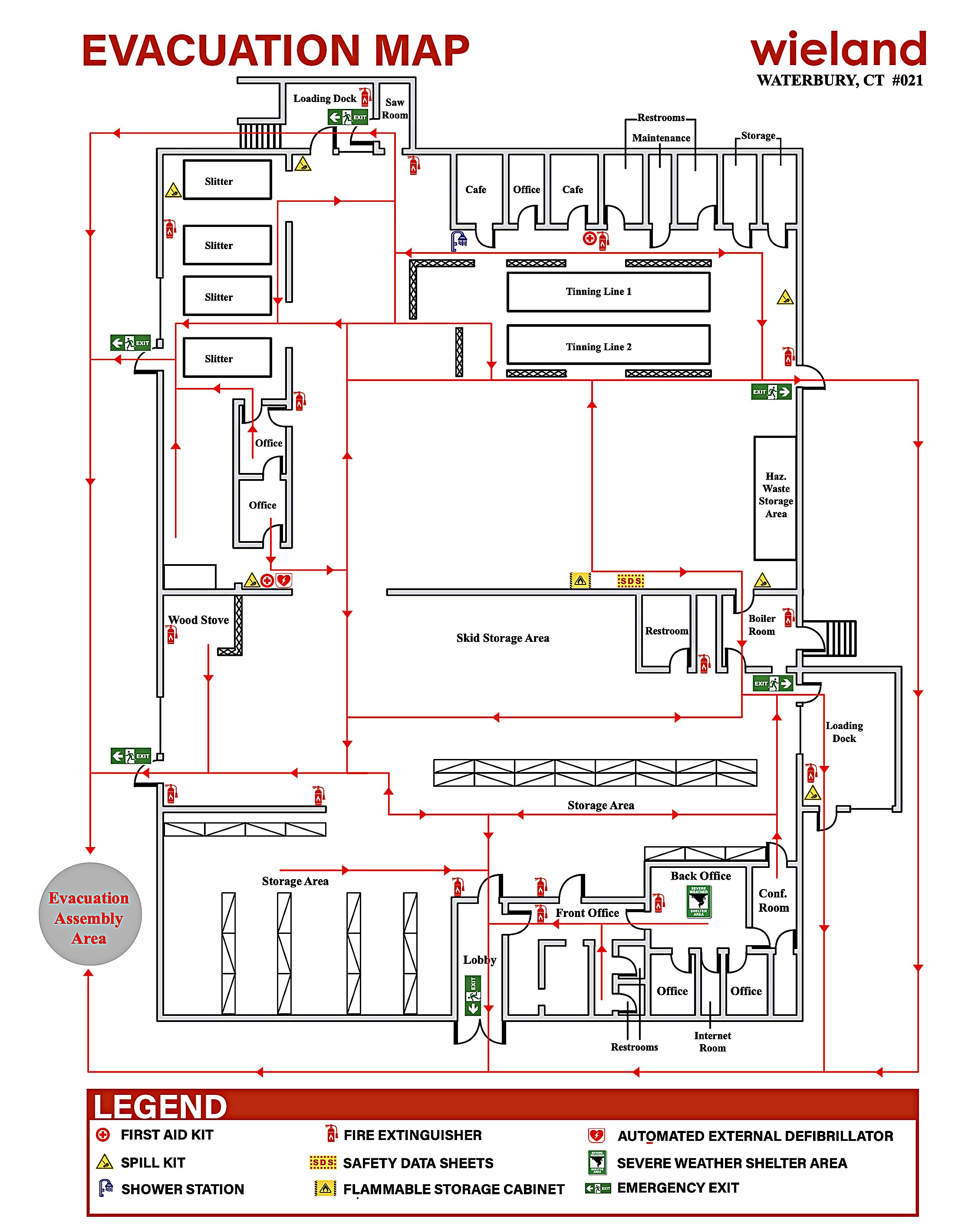
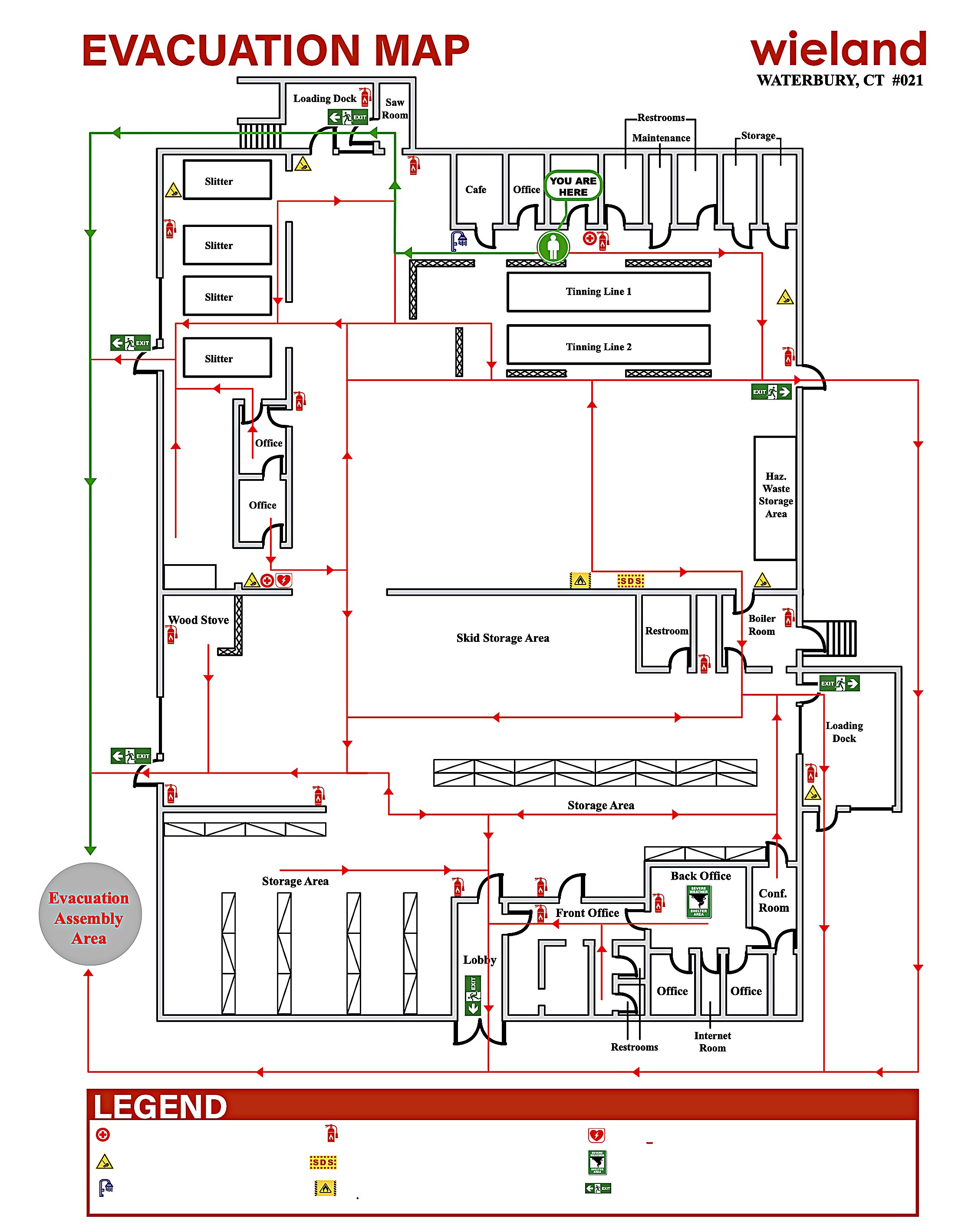
The plant redrawn from scratch to add the exits and the safety pathways out of the building, with a legend for every piece of emergency equipment in it.
Why it existed
The posted map was out of date, the equipment on it had moved, and there was no marked route out of the warehouse.
What changed
The same pathways were painted on the warehouse floor, so the line on the map and the line under your feet are the same line. Eleven versions were drawn, one per posting point — each shows YOU ARE HERE and traces that spot's own route out in green — and the drawing then went on to carry the housekeeping zones, so the floor only ever had to learn one picture of the plant.
Plant evacuation map with egress routes and equipment legendEvacuation map, cafe wall version, with YOU ARE HERE and its route in green
The master on the left: four slitters, two tinning lines, skid storage, hazardous waste, boiler room, every exit and the assembly area. The legend covers first aid, AED, spill kit, safety data sheets, flammable storage, shower station, severe weather shelter and every emergency exit. On the right, the cafe-wall version of the same drawing — the green route is the way out from that exact spot, and it is the route painted on the floor. There is one of these for the saw room, the slitter bay, the lockers bay, the tinning exit, the loading dock, the SDS station, the safety wall and each office.Tap a page to open it full size
25

Painting the floor into a system

Wieland Metal Services · Operations Manager · 2025–2026

What it is
Three builds with the same contractor: a painted safety walkway through the plant, the entry remodelled around what a visitor needs before they reach the floor, and marked lanes with charging bases for the forklifts.
Why it existed
People were walking through a working plant with nothing telling them where it was safe to be. Visitors arrived without the PPE the floor requires. And forklifts were parked wherever they happened to stop, so finding the right capacity truck — with a charge in it — was a search.
What changed
The walkway is the same line drawn on the evacuation map, so the route on the wall and the route under your feet are the same route. A first-time visitor is equipped and briefed before they step out. And every truck has a marked spot with a charger at it.

The safety walkway

  • A painted route through the plant for visitors, customers and staff to cross without being in harm's way
  • The same line that the evacuation map draws, so the map and the floor agree

The entry

  • Repainted and remodelled with the same contractor
  • A purpose-built shelf holding visitor hard hats and safety glasses — both required on the production floor
  • The visitor policy brochure sits on it, a must-read for anyone coming out on the floor for the first time

Forklift lanes

  • Waste cleared out first — the room for the lanes came out of the cleanup
  • Lanes painted so every truck has a place to be parked
  • Charging bases added at the lanes, so each weight capacity is easy to find, charge and take out